
What Are the Key Differences Between Test Separators and Production Separators?
Previously, we discussed the differences between two-phase separators and three-phase separators. Today, let’s look at another topic that often causes confusion in the oil and gas industry: test separators vs. production separators.
Although both belong to the category of separation equipment, they serve very different purposes in terms of design philosophy, operating conditions, performance requirements, and application scenarios. Together, they form an essential link between reservoir evaluation and large-scale hydrocarbon production.
A test separator can be seen as the “data collection tool” of oilfield development. Its main function is to accurately separate and measure oil, gas, and water from a single well, providing reliable production data for reservoir analysis, well testing, and production evaluation.
A production separator, on the other hand, acts more like the “central processing unit” of a production facility. It is designed to continuously process the combined production stream from multiple wells, ensuring stable separation and efficient downstream transportation.
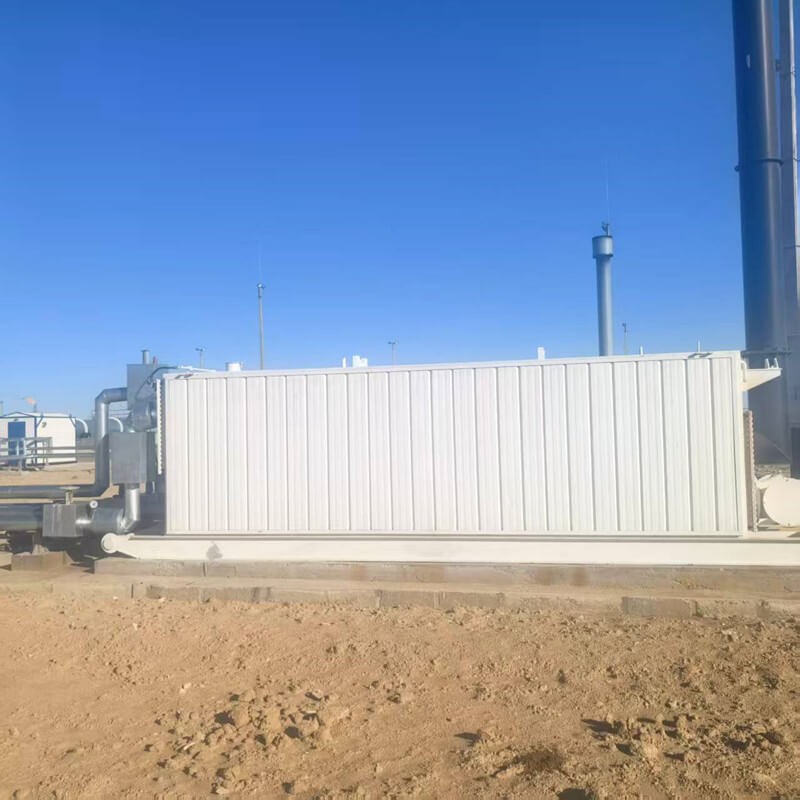
One of the most obvious differences lies in processing capacity and pressure rating.
Test separators are typically designed for single-well production testing, so their processing capacity is relatively limited. In most cases, they handle production volumes ranging from a few cubic meters to several hundred cubic meters per day. They are also commonly designed as low-pressure vessels, allowing operators to perform flexible adjustments and achieve higher measurement accuracy during testing operations.
Production separators are built for centralized gathering systems involving multiple wells. Their processing capacity is significantly larger, with a single unit often handling 2,000–5,000 cubic meters per day or even more in large-scale facilities. To meet the requirements of continuous field production and long-distance transportation, production separators are usually designed for medium- to high-pressure operation, commonly within a pressure range of 1.6–6.4 MPa. Stable separation under elevated pressure is critical to maintaining downstream process reliability.
The differences also become very clear when comparing application scenarios and operating methods.
Application Scenarios
Test separators are mainly used during well testing, trial production, and production evaluation stages. They are commonly found in new well testing programs, workover evaluations, and reservoir performance analysis. In many metering stations, one or two test separators are shared among multiple wells through periodic switching operations, allowing operators to monitor reservoir behavior dynamically over time.
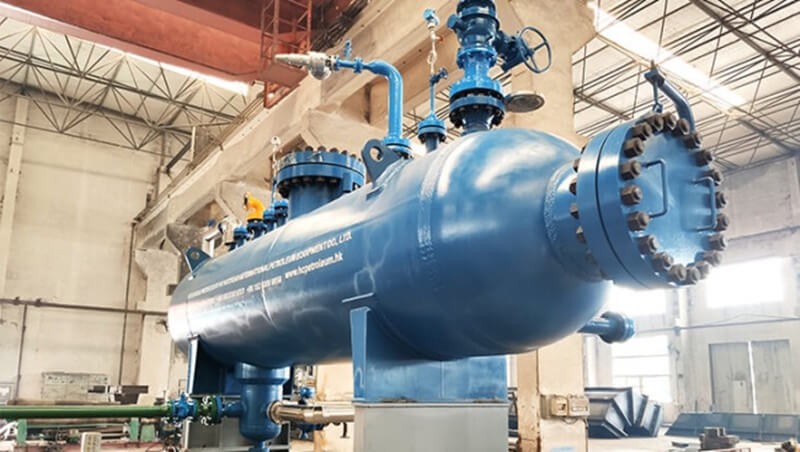
Production separators are widely used in both onshore and offshore production facilities and are considered core equipment in gathering and processing stations. They are directly connected to field gathering pipelines and downstream treatment systems, ensuring stable oil, gas, and water processing for continuous production operations. Offshore production separators may also require additional certifications for corrosion resistance and wave-load protection to withstand harsh marine environments.
Operating Modes
Test separators are often operated intermittently. Traditional testing procedures may require manual valve switching, flow adjustments, and production data recording. In some older systems using gauge glass oil measurement methods, operators even need to manually observe liquid level changes during testing. Although automated test separators are becoming increasingly common, manual operations are still widely used in remote oilfields and low-production wells.
Production separators, by contrast, are designed for continuous and highly automated operation. Interface level controllers continuously monitor oil-water interface levels, while control valves maintain stable process conditions automatically. Modern production separators are typically equipped with integrated automation systems capable of monitoring pressure, temperature, and flow rate in real time. If operating conditions exceed preset limits, the system can automatically trigger alarms or corrective adjustments, minimizing manual intervention and improving operational reliability.
Performance requirements are also very different.
For test separators, measurement accuracy is the top priority. The equipment must minimize measurement errors to provide reliable production data for reservoir evaluation and decision-making. As a result, the design must ensure both effective phase separation and precise metering performance, even under challenging operating conditions such as intermittent flow wells, low gas-oil ratio wells, or low liquid production rates.
Production separators place greater emphasis on separation efficiency and long-term operational stability. They are expected to maintain consistent separation performance during continuous operation, often with requirements such as reducing crude oil water content to below 0.5% before downstream transportation or processing. In addition, they must be capable of handling fluctuations in flow rate, pressure, and fluid composition from different wells within the gathering system.
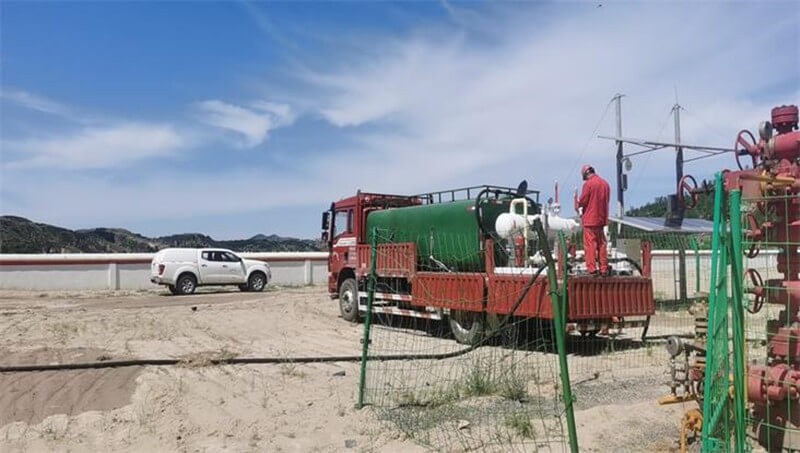
So while both are called “separators,” test separators and production separators are designed for fundamentally different operational objectives. Understanding these differences is essential when selecting equipment for specific field applications.
As the industry continues to evolve, test separators are moving toward greater automation, intelligent monitoring, and compact design. Production separators, meanwhile, are developing toward larger capacities, integrated systems, and increasingly customized configurations.
Looking ahead, I believe the oil and gas industry will place even greater emphasis on equipment integration. Integrated solutions such as separation-buffering systems and combined separation-heating-buffering units are likely to become increasingly common in future oilfield facilities.