
How to Choose the Right Oil-Water Separator for Heavy Oil Applications?
We frequently receive inquiries from customers about selecting the right oil-water separator for heavy oil production. Unlike conventional crude oil, heavy oil is characterized by high viscosity (typically above 1,000 mPa·s), poor fluidity, a strong tendency to form stable emulsions, and a high content of resins and asphaltenes. These properties significantly affect oil-water separation efficiency and oil discharge performance. Therefore, separator selection for heavy oil should not simply follow conventional crude oil standards. In most cases, we recommend a combination of heating and demulsification technologies to achieve reliable separation performance.
The most widely used and cost-effective solution is to reduce heavy oil viscosity through heating. In practice, the fluid is often heated to temperatures above 80°C, which accelerates water droplet settling and improves oil-water stratification. This approach is particularly suitable for wellhead measurement and primary separation applications.
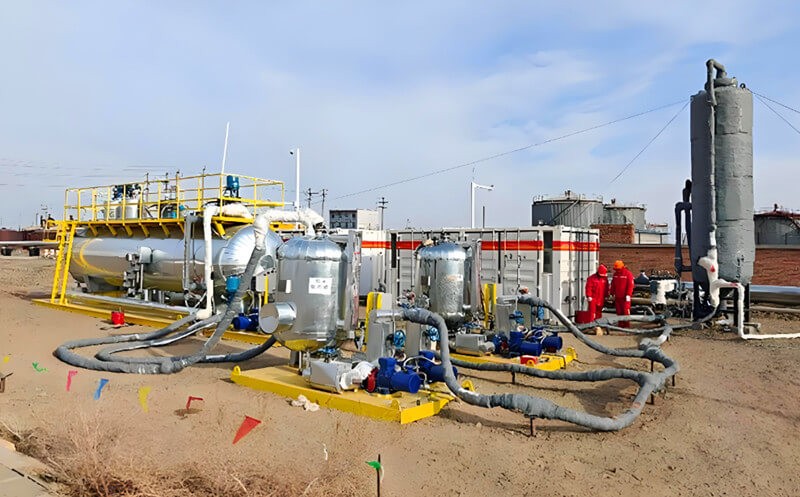
For heavy oil produced water with severe emulsification, we generally recommend separators equipped with coalescing internals and chemical demulsification systems. Coalescing media promote the aggregation of fine oil droplets into larger droplets, while viscosity-reducing and anti-foaming chemicals further enhance separation efficiency. This combination is especially effective when dealing with stable oil-water emulsions.
When it comes to separator configuration, horizontal separators are usually the preferred choice for heavy oil service. Compared with vertical designs, horizontal separators provide larger liquid handling capacity and longer retention time, which are essential for effective gravity settling. They also offer more space for installing heating coils, skimming mechanisms, and other auxiliary equipment required in heavy oil processing. Vertical separators are generally more suitable for low-flow-rate testing or pilot production operations.
Another important consideration is foam generation. Heavy oil production often produces significant amounts of foam, which can interfere with gas-liquid separation and reduce measurement accuracy. To address this issue, separators should incorporate foam-breaking devices or anti-foam internals to ensure effective separation of oil, gas, and water while minimizing liquid carryover and gas entrainment.
Heavy oil streams may also contain corrosive substances such as organic acids, resins, and other contaminants. Therefore, corrosion resistance should be carefully considered during equipment selection. We typically recommend stainless steel internals or carbon steel vessels with corrosion-resistant coatings to improve durability and extend service life.
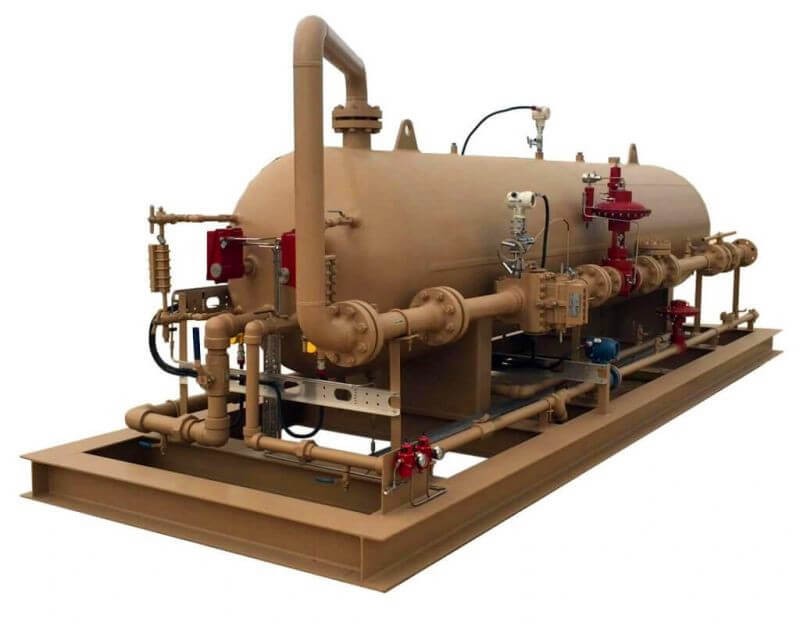
From a design perspective, sufficient operating margins are essential. We generally recommend sizing the separator with 20% to 30% additional capacity above the expected maximum liquid production rate to accommodate production fluctuations and prevent overload conditions. Retention time should also be increased compared with conventional crude oil applications. As a guideline, free oil separation retention time should not be less than 15 minutes, while emulsified oil systems may require 30 minutes or longer. In addition, the design pressure must fully match wellhead operating conditions and comply with applicable pressure vessel codes and local oil and gas safety regulations.
To improve operational reliability and reduce maintenance requirements, we also recommend integrated systems equipped with automatic temperature control, automatic oil discharge, and automatic liquid level control functions. These features help minimize manual intervention, reduce labor intensity, and prevent operational issues such as wax deposition or heavy oil solidification caused by delayed operator response.
Selecting an oil-water separator for heavy oil applications requires more than simply matching flow rates and pressure ratings. Factors such as viscosity, emulsion stability, foam generation, corrosion potential, retention time, and heating requirements must all be carefully evaluated. A properly designed heavy oil separation system can significantly improve separation efficiency, reduce operating costs, and ensure long-term stable production.
If you are evaluating a heavy oil production project, working with an experienced separator manufacturer can help ensure that the equipment configuration is optimized for your specific operating conditions.