
Early Production Facility (EPF): Key Units and Process Overview
An Early Production Facility (EPF) is a temporary or semi-permanent oil and gas processing facility used to bring newly developed wells into production before a permanent Central Processing Facility (CPF) is completed.
EPFs are commonly used for new oil and gas fields, well testing, early-stage field development and fast-track production projects. Their main purpose is to receive the wellstream, separate oil, gas and water, perform the necessary treatment, and prepare the products for storage or export.
How Does an Early Production Facility Work?
The production fluid from an oil or gas well is normally a mixture of crude oil, natural gas, produced water and, in some fields, sand and other solids.
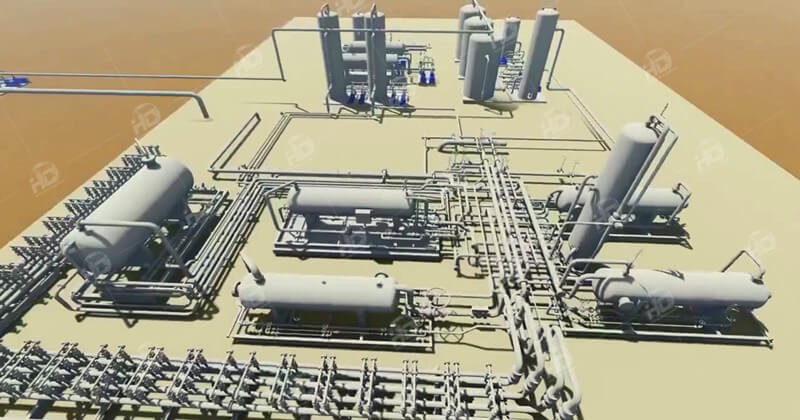
A simplified EPF process is:
Wellhead → Production Manifold → Desanding → Separation → Oil & Gas Treatment → Water Treatment → Metering → Storage / Export
The actual configuration varies according to well conditions, production rates, fluid properties and product specifications.
Key Units of an EPF
1.Wellhead and Production Manifold
The wellhead controls the flow and pressure of the produced fluids. A production manifold collects production from multiple wells and directs the flow to the appropriate processing system.
For individual well performance testing, a well can be diverted to a dedicated test line and Test Separator.
2.Test Separator
A Test Separator is used to measure the production performance of an individual well.
Depending on the project requirements, it can separate and measure:
Oil
Gas
Water
Test separators are widely used during early field development to obtain accurate production data and evaluate individual well performance.
3.Desander
Sand produced from the reservoir can cause erosion and damage to downstream equipment.
A Desander is therefore used in applications where significant sand production is expected. It removes sand and solid particles from the wellstream and helps protect separators, valves, pipelines, pumps and other process equipment.
4.Three-Phase Separator
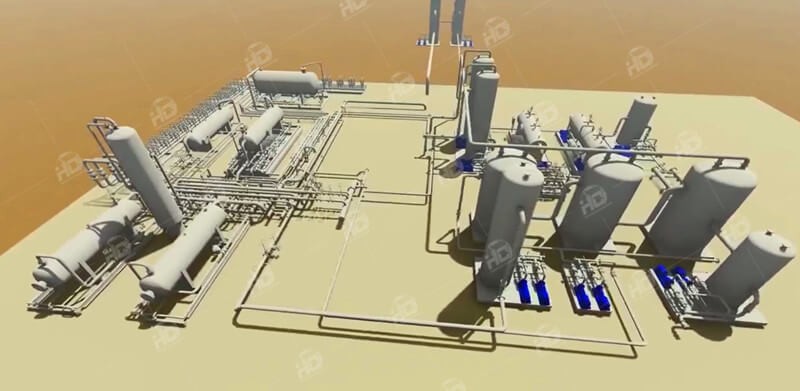
The Three-Phase Separator is one of the core process vessels in an EPF.
It separates the wellstream into three phases:
Gas + Oil + Produced Water
The separated gas is normally sent for gas treatment, while the oil and produced water are routed to their respective treatment systems.
Separator design depends on factors such as:
Flow rate
Design pressure
Design temperature
Gas-oil ratio
Water cut
Fluid properties
Required residence time
Both horizontal and vertical separators can be selected according to the process requirements.
5.Oil and Gas Treatment
After separation, additional treatment may be required before the oil and gas can be stored or exported.
For crude oil, equipment may include Heater Treaters, Desalters or Stabilizers, depending on the crude properties and export requirements.
For natural gas, typical equipment may include Gas Scrubbers, Compressors and Gas Dehydration Units.
These systems help remove unwanted liquids, water and other contaminants while bringing the products closer to the required specifications.
6.Produced Water Treatment
Produced water separated from the wellstream may contain residual oil and suspended solids.
Depending on the disposal or reinjection requirements, an EPF may include equipment such as:
Hydrocyclones
CPI Separators
Induced Gas Flotation Units
Filters
The treated water can then be routed for reinjection or disposal.
7.Storage and Metering
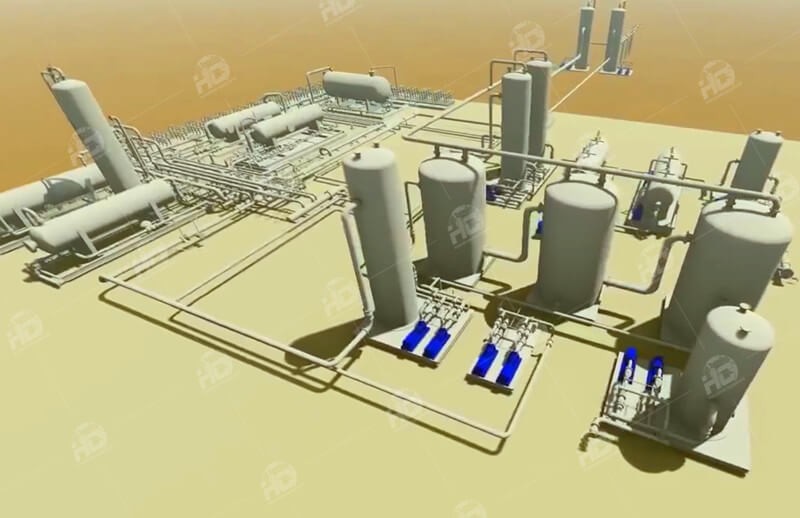
After treatment, crude oil may be transferred to storage tanks before being transported by pipeline or truck.
Oil and gas metering systems are also used to monitor production and, where required, support custody transfer.
applications, including:
Three-Phase Separators
Test Separators
Desanders
Gas Scrubbers
Pressure Vessels
Process Equipment
Our equipment can be designed according to project-specific operating conditions, design requirements and applicable standards.
For customized oil and gas equipment solutions, please contact sales@hcpetroleum.hk.