
Why Has This Venezuelan Customer Ordered Scrubber Skids from Us Four Times in a Row?
When it came time to confirm the 4th repeat order, the customer's purchasing manager sent us a very short email: The specifications are the same as the previous batch, quantity 1 unit, please evaluate the delivery time and get back to me.
There was no new round of technical clarification, no repeat factory inspection, and no requirement for third-party inspection at the factory. From the first batch, when the equipment had to go through strict inspection at our factory, to the 4th batch being ordered directly—what happened in between? It was actually quite simple.
At the end of 2024, this Venezuelan customer found us through Google. They needed a fuel gas scrubber skid for the front end of a boiler combustion system.
Their fuel gas stream contained small amounts of condensate and water. Condensate entering the burner could cause combustion instability or even knocking, while water could affect ignition and combustion stability. When these two factors occur together, the combustion conditions may deviate from the design parameters and, in serious cases, directly cause failures in the burner system.
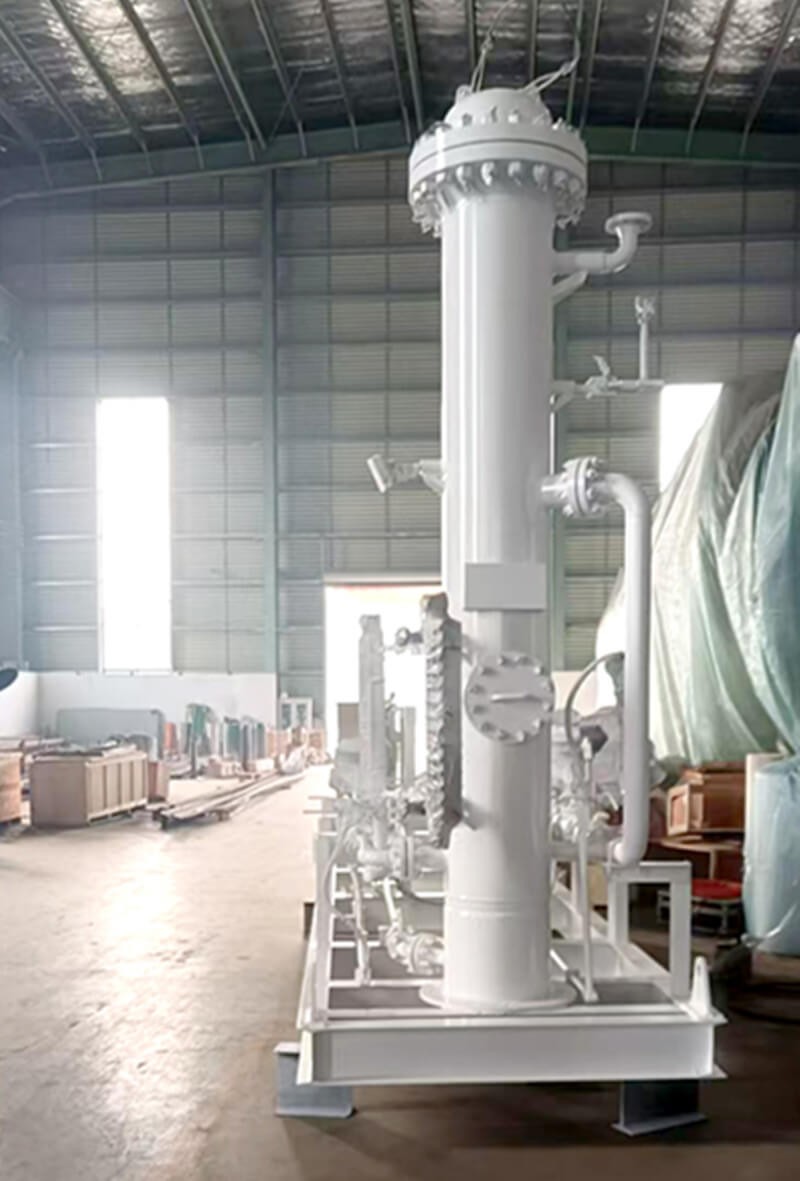
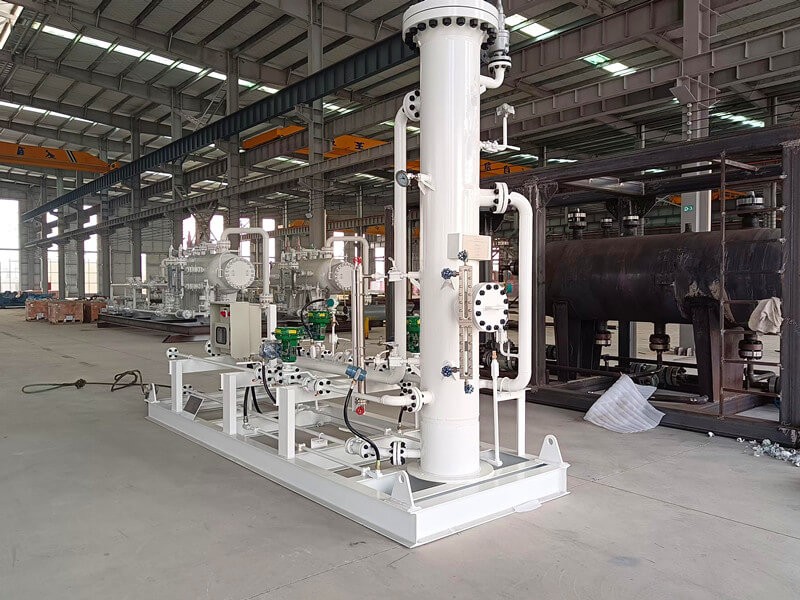
The customer needed the scrubber skid to remove these components and deliver clean, dry gas to the boiler. Our scrubber skid integrates a pressure regulating valve, which can effectively reduce the gas pressure to the level required by the boiler.
The communication cycle was much longer than we had expected. Back and forth, the customer's technical team raised dozens of questions covering process parameters, material selection, skid dimensions, and connection standards. Our export engineers' inboxes accumulated a large number of technical emails from this one customer alone.
It was not that the customer was difficult to deal with. This company simply knew what they were doing. Their questions were not about "whether it could be done," but "why it was designed this way"—what standards the welding procedures were based on, how wall thickness allowance was considered, and how the maintainability of internal components could be ensured. Behind every question was practical experience with actual operating conditions.
We later realized that this kind of customer was not simply "asking for a quotation." They were "screening suppliers."
Before placing the order, the customer sent a representative to our factory specifically for an inspection. The entire factory inspection lasted two days. The customer did not simply walk through the workshop. Instead, they brought a checklist and verified each item one by one:
Whether the welding procedure specifications and welder qualifications were authentic and traceable
Calibration certificates for pressure testing equipment and inspection instruments
Whether the production schedule and capacity could meet the promised delivery time
Whether quality inspection records were complete and traceable
At the workshop, the customer paid particularly close attention to the welding work and took a large number of photos to send back to their technical team for further review.
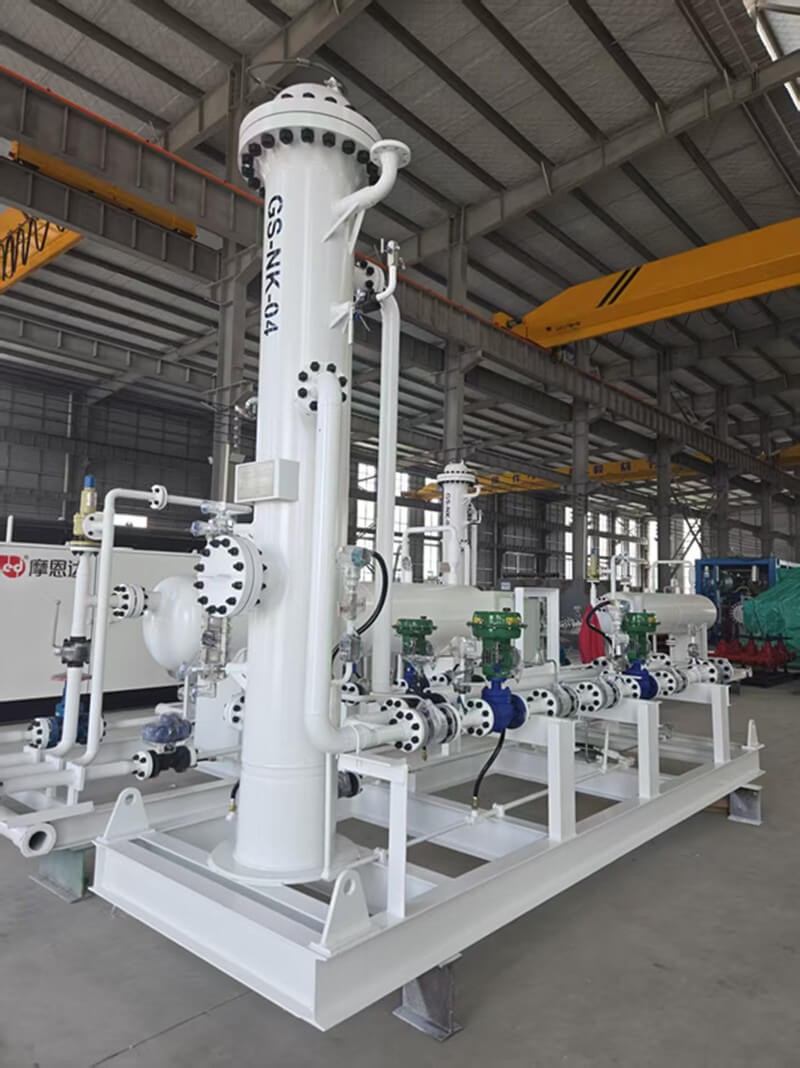
After the factory inspection, the customer quickly confirmed the order. Since this was our first cooperation, once the first batch of equipment was completed, the customer came to our factory again for final inspection. This time, the inspection was even more thorough than the factory audit.
The inspection covered the entire process, from material certificates to the final pressure test. The customer checked the material certificates, welding records, and other documentation item by item.
During the inspection, the customer also raised several corrective requirements, mainly concerning the appearance of individual welds and packaging. We arranged the corrections on site, and the customer signed off and released the equipment only after confirming that everything met their requirements.
For the customer, this order was their first time "taking a risk" on a Chinese supplier. For us, it was also our first opportunity to prove our manufacturing and technical capabilities.
When the second repeat order came, the customer's process had clearly become simpler: the technical parameters followed the first-batch design, with no new technical review; no one was sent to the factory for on-site supervision during manufacturing; and before shipment, they only required us to provide the complete final inspection report and pressure test videos.
From the third batch onward, communication became even shorter—the purchasing team simply placed the order based on the historical specifications.
By the time of the 4th repeat order this year, the entire process had been reduced to: confirm specifications (same as the previous batch) → confirm delivery time → place the order → we manufacture according to our standard procedures and submit the inspection report → shipment.
What do four repeat orders actually tell us?
It is not that we "persuaded" this customer to continue working with us. Instead, after the first batch was put into operation, the customer verified our equipment's performance through actual operating conditions.
Petrochemical equipment is not a consumer product. Customers do not place repeat orders simply because a supplier provides "good service." The only real reason for repeat business is that the equipment operates reliably under actual conditions without problems, and that after-sales support is responsive when needed.
The Venezuelan customer's transition—from "personally confirming every step" at the beginning to later "trusting our standard procedures"—was not achieved through communication skills. It was earned through the first batch of equipment operating reliably in the field without failures.
We do not expect every customer to become a long-term partner. But our attitude toward every order remains the same: build long-term business relationships and achieve win-win cooperation.