





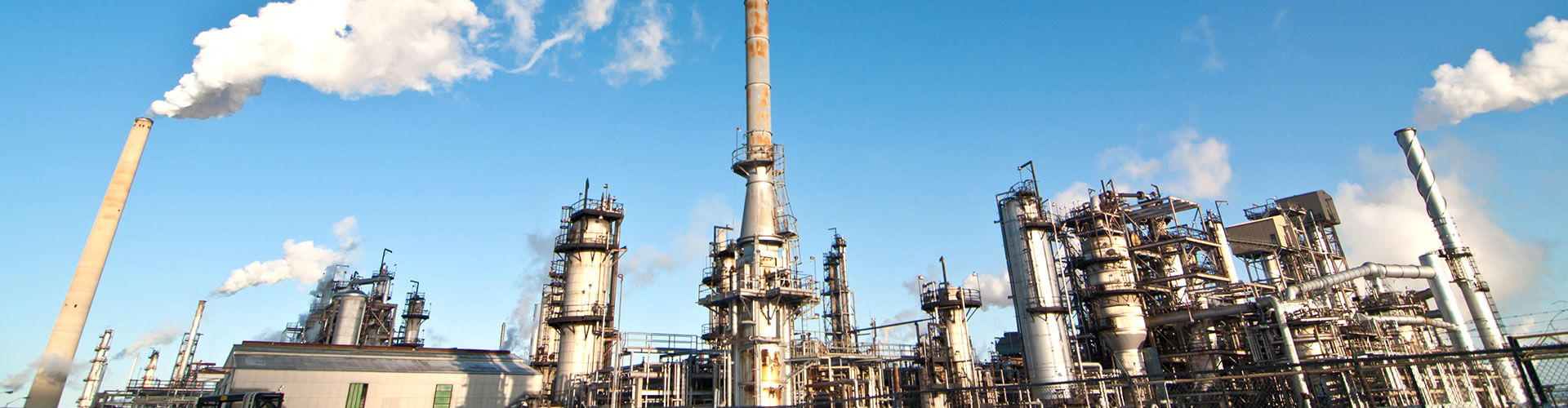
In oil & gas and petrochemical projects, customers often encounter a common situation when purchasing pressure vessel equipment. Different manufacturers may provide very different quotations for equipment that appears to be the same type, such as a three-phase separator, storage tank, or pressure vessel. Even when the dimensions and pressure ratings look similar, the final prices can vary significantly.
Many customers may wonder:Why are some manufacturers able to offer much lower prices for the same equipment?
In fact, the cost of a pressure vessel is not determined only by its size or external appearance. The design standard, material selection, fabrication requirements, inspection level, and equipment configuration all have a direct impact on the final quotation.
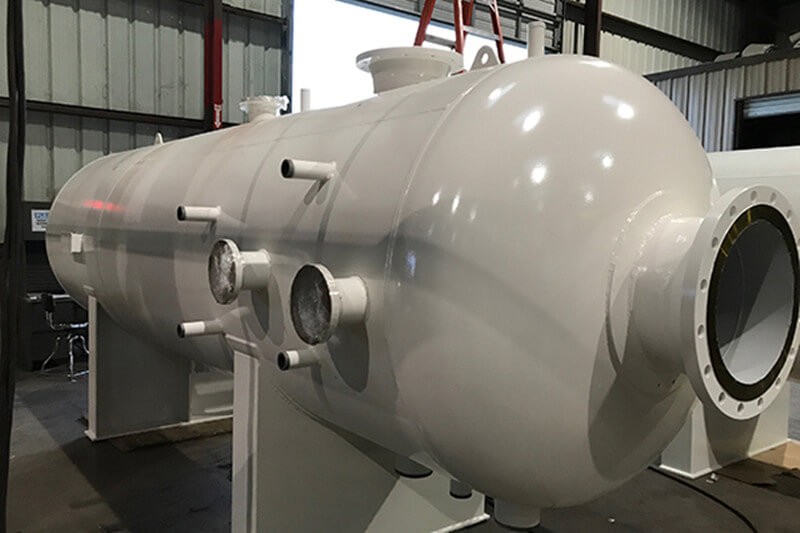
Different Design Standards Lead to Different Manufacturing Costs
Pressure vessels are not simple containers manufactured according to dimensions only. Two vessels with similar sizes may have completely different manufacturing requirements if they are designed according to different standards.
Common standards and requirements used in pressure vessel manufacturing include ASME VIII Division 1, GB standards, PED certification requirements, and customer-specific engineering specifications.
These standards may have different requirements for mechanical design calculations, shell thickness, welding procedures, inspection methods, pressure testing, and manufacturing documentation.
For example, a separator designed and manufactured according to ASME VIII Division 1 usually requires stricter fabrication control, more detailed quality documentation, and higher inspection requirements compared with a standard pressure vessel. These additional requirements will naturally increase the manufacturing cost.
Material Selection Has a Significant Influence on Price
Material cost is one of the major components of pressure vessel manufacturing expenses.
Depending on the operating conditions, pressure vessels may be manufactured using different materials, such as SA-516 Gr.70 carbon steel, stainless steel 304/316, duplex stainless steel, or low-temperature steel.
Even when two vessels are both made of carbon steel, differences in material grade, plate thickness, and certification requirements can result in different prices.
For example, if a high-pressure separator is required to operate in a low-temperature environment, the selected material may need to meet low-temperature impact test requirements. This will increase both material costs and inspection costs.
Design Pressure Affects Vessel Structure and Thickness
Many customers focus mainly on vessel dimensions, such as 42” × 10’. However, the actual design of a pressure vessel involves many more parameters.
For example, two vessels with the same dimensions may have different design pressures:One vessel is designed for 600 PSI, while another is designed for 1440 PSI.
Although their external dimensions may look identical, the 1440 PSI vessel requires a stronger mechanical design. The shell thickness, head thickness, welding requirements, and fabrication processes will all be different.
As a result, the manufacturing cost can vary significantly.
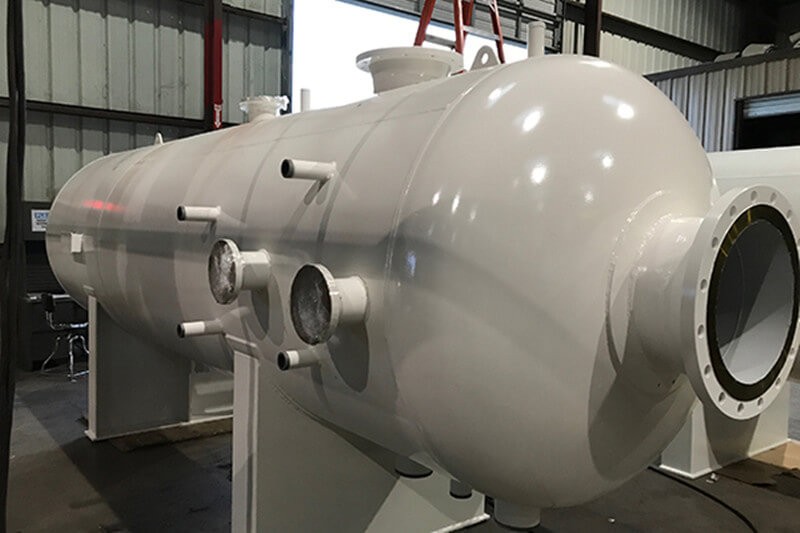
Welding Procedures and Inspection Requirements Also Affect Cost
Pressure vessels are safety-critical equipment, and welding quality plays an important role in ensuring safe operation.
During fabrication, manufacturers may need to meet requirements related to qualified welders, welding procedure qualification (WPS/PQR), and non-destructive examination methods such as radiographic testing (RT), ultrasonic testing (UT), magnetic particle testing (MT), and penetrant testing (PT).
Different projects have different inspection requirements.
For example, 100% RT inspection requires more inspection time and additional cost compared with spot inspection. However, it also provides better quality assurance and manufacturing traceability.
Equipment Configuration Can Change the Final Quotation
A pressure vessel is not only a fabricated steel shell. According to different process requirements, additional components may be required, including mist eliminators, inlet diverters, liquid level control connections, safety valve nozzles, instrumentation connections, special coatings, and corrosion protection systems.
Taking a three-phase separator as an example, a standard separator and a separator equipped with high-efficiency coalescing components or customized internal structures may have significant cost differences.
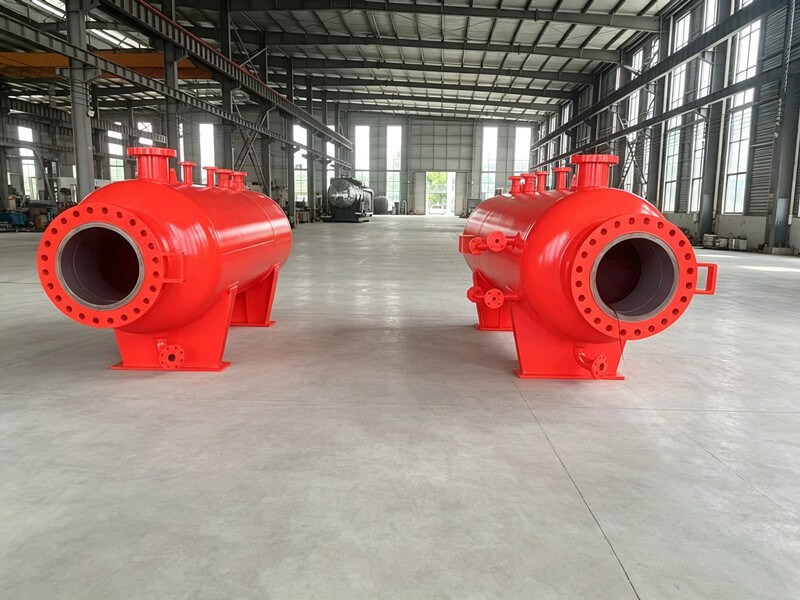
Manufacturing Capability and Quality Control Are Also Important Factors
Pressure vessel manufacturing involves many important steps, including raw material purchasing, material verification, cutting and fabrication, welding, non-destructive testing, pressure testing, surface treatment, and final inspection.
Different manufacturers may have different levels of experience, production control systems, and quality management capabilities. These differences are also reflected in their quotations.
A lower price does not always mean a better choice. When evaluating suppliers, customers should consider whether the manufacturer can meet project requirements, maintain consistent quality control, and provide reliable documentation.
The price difference between pressure vessels is usually caused by multiple factors rather than simply the equipment size.
Design standards, material requirements, pressure ratings, welding procedures, inspection levels, configuration requirements, and manufacturing experience all influence the final cost.
When selecting a pressure vessel supplier, customers should not only compare quotations but also evaluate the manufacturer’s technical capability, quality control system, and ability to deliver reliable equipment for long-term operation.
A qualified pressure vessel manufacturer provides more than equipment — it provides engineering confidence and project value.
-
2026 / 08 / 13
 Dual Pot Sand Filter Designed and Manufactured for an Oman Oil & Gas Project
 -
2026 / 08 / 07
 Three Vertical Three-Phase Separators Completed for Oil & Gas Project by HC Petroleum
 -
2026 / 07 / 24
 Two 1440 PSI Three-Phase Separators Completed for Nigeria Oil & Gas Project
- +86 158 6190 3617
