






During oil and gas well testing, high-pressure well fluids flow through temporary surface equipment before being measured and evaluated. If an unexpected pressure condition, pipeline failure, or fire occurs, the wellstream must be isolated quickly to reduce the risk of equipment damage, hydrocarbon release, and personnel injury.
This is where the Emergency Shutdown (ESD) system plays an important role.
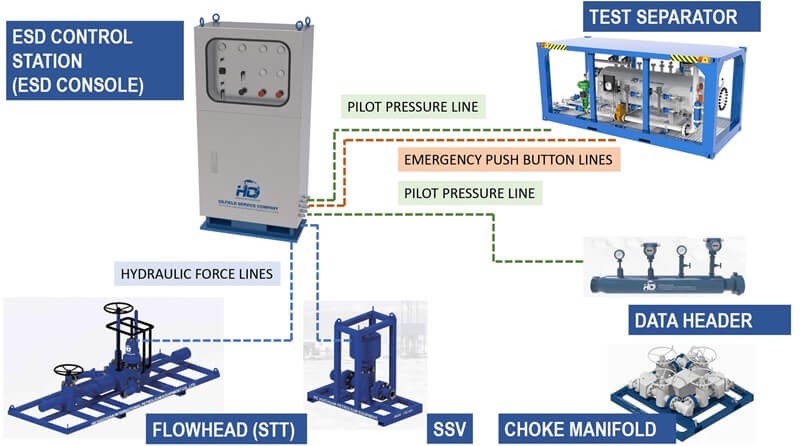
In a typical surface well testing package, the ESD system is connected to one or more hydraulically actuated Surface Safety Valves (SSVs). It monitors selected operating conditions and provides manual or automatic shutdown functions when an abnormal condition is detected.
But how does the system work, and how do the pneumatic and hydraulic circuits work together to close the SSV?
1.What Are an ESD System and an SSV?
An Emergency Shutdown (ESD) system is a safety control system designed to initiate well shut-in when an emergency or predefined abnormal operating condition occurs.
In surface well testing, an ESD system typically includes a control panel, pneumatic control circuits, hydraulic pumps, pressure pilots, remote shutdown stations, and associated connections.
The Surface Safety Valve (SSV) is the final shutdown device controlled by the ESD system. It is typically a hydraulically actuated, fail-closed valve installed in the surface flowline or well testing pressure-control arrangement.
During normal operation, hydraulic pressure keeps the SSV in the open position, allowing well fluids to pass through the testing equipment. When an ESD signal is activated, the hydraulic holding pressure is released, and the valve closes under its fail-safe mechanism.
In simple terms:
ESD system: Detects or receives a shutdown signal and initiates the shutdown action.
SSV: Physically stops the flow of well fluids when the shutdown command is executed.
Depending on the surface well testing configuration, the ESD system may also control the hydraulically actuated valve on the flowhead.
2.How Does a Pneumatic-Hydraulic ESD System Work?
A pneumatic-hydraulic ESD system uses two interconnected circuits. The pneumatic circuit provides the shutdown control signal, while the hydraulic circuit supplies the operating pressure required to hold the safety valves open.
The Pneumatic Circuit: Detecting and Transmitting Shutdown Signals
The pneumatic circuit is generally supplied by compressed air, often from the rig air system.
It connects the ESD control panel with different shutdown devices, which may include:
Remote ESD push-buttons
High-pressure (Hi) pilots
Low-pressure (Lo) pilots
Thermal fusible plugs
These devices provide different ways to initiate an emergency shutdown.
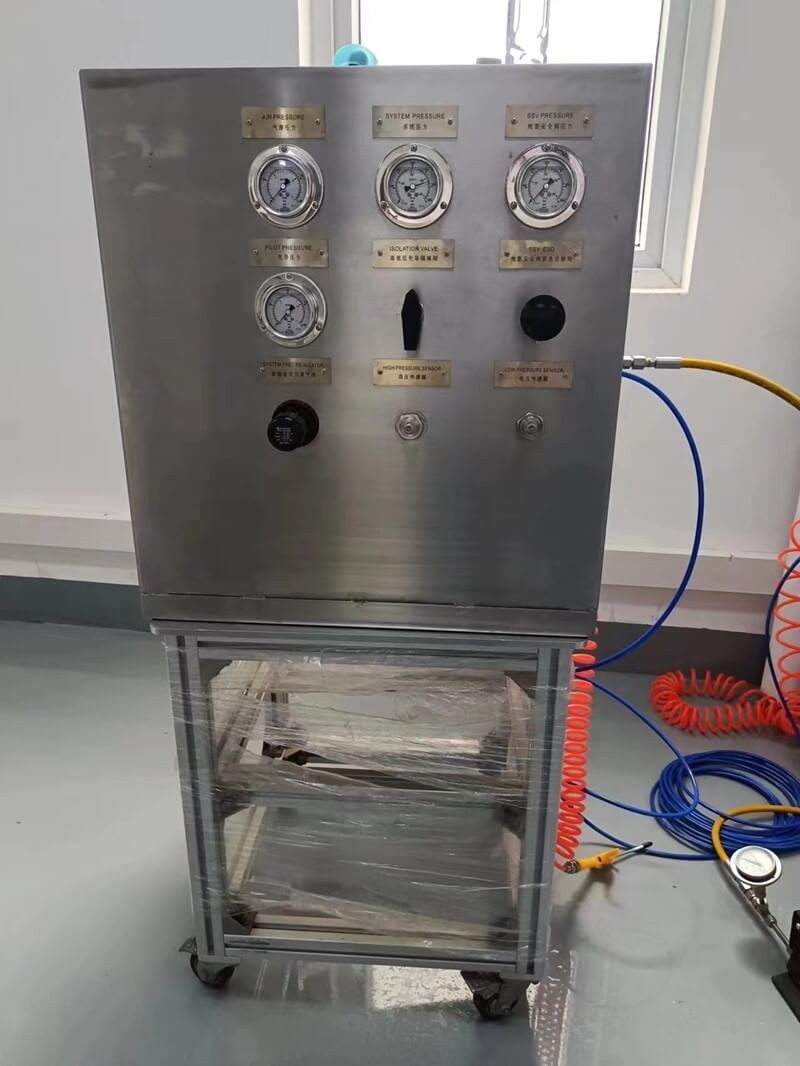
For example, a high-pressure pilot can detect pressure exceeding its preset limit, which may indicate a downstream blockage or another abnormal operating condition. A low-pressure pilot can respond to pressure falling below its preset limit, potentially indicating a leak or flowline rupture.
Thermal fusible plugs provide another layer of protection. When exposed to a specified high temperature, the fusible element releases pressure from the pneumatic circuit and initiates shutdown.
Remote ESD stations allow personnel to manually initiate shutdown from designated locations, such as the rig floor or separator area.
When any configured shutdown device is activated, the pneumatic control pressure is released. This change in pneumatic pressure triggers the hydraulic shutdown mechanism.
The Hydraulic Circuit: Operating the Safety Valves
The hydraulic circuit provides the force required to keep the actuated SSV in the open position.
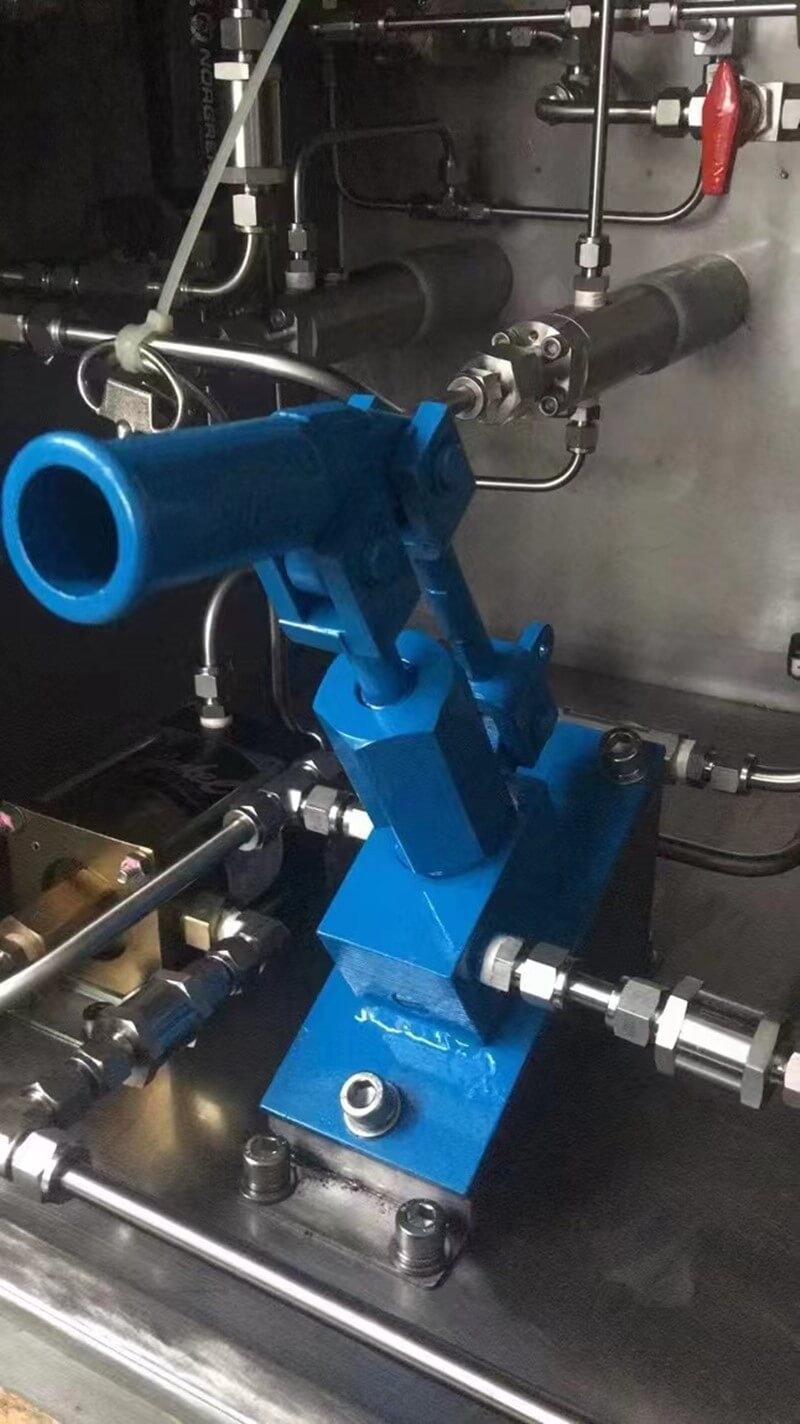
An air-driven hydraulic pump converts the available pneumatic energy into high-pressure hydraulic output. The hydraulic fluid is then delivered to the valve actuator through the control lines.
As long as the required hydraulic holding pressure is maintained, the SSV remains open.
When the pneumatic circuit is vented following an ESD activation, the hydraulic control system releases the pressure holding the valve open. The actuator then moves the valve toward its fail-closed position.
This arrangement provides an important safety function: the SSV is designed to close when the required holding pressure is lost, rather than relying on continuous hydraulic pressure to close it.
The exact response depends on the actuator design, control panel arrangement, and equipment configuration.
3.What Happens When an ESD Is Activated?
The shutdown sequence can be understood through the following steps:
1.An abnormal condition occurs. A pressure pilot detects a high- or low-pressure condition, a fusible plug responds to excessive heat, or an operator activates a remote ESD push-button.
2.The pneumatic circuit is vented. The activated shutdown device releases the pneumatic control pressure.
3.The hydraulic holding pressure is released. The hydraulic control mechanism responds to the loss of pneumatic control pressure and vents the actuator's hydraulic pressure.
4.The SSV closes. Without the hydraulic pressure required to hold it open, the fail-closed actuator drives the valve to its closed position.
5.The wellstream is isolated. The closed safety valve interrupts the flow through the protected section of the surface well testing system.
This sequence allows the ESD system to initiate shutdown without requiring personnel to approach the high-pressure flowline and manually operate the valve.
4.How Should an ESD System Be Tested Before Well Testing Operations?
Before commissioning a surface well testing package, the ESD system should be functionally tested to verify that all shutdown devices, control circuits, and actuated valves perform their intended functions.
Several checks are particularly important.
Hi-Lo Pressure Pilot Testing
High- and low-pressure pilots should be tested using a suitable regulated pressure source. The actual activation pressures should be recorded and compared with the approved shutdown set points.
This confirms that the pilots respond correctly to the specified pressure conditions.
Remote ESD Station Testing
Each remote shutdown station should be activated individually to verify that the shutdown signal reaches the control panel and initiates the expected hydraulic pressure release.
All designated stations should be checked to confirm that the shutdown function is available from the required operating locations.
SSV Closure Testing
The complete shutdown sequence should be tested to verify that the SSV moves from the fully open position to the fully closed position following an ESD activation.
The closure time should be measured and compared with the applicable equipment specifications and operational requirements.
Fusible Plug and Other Shutdown Device Verification
Where thermal fusible plugs are installed, their condition, connections, and specified activation characteristics should be verified according to the manufacturer's procedures. Other shutdown devices should also be checked as part of the complete safety circuit.
Bypass and Override Verification
Some ESD panels include bypass or override functions for specific testing and maintenance activities.
Any bypass must be controlled under an approved procedure, clearly identified, and monitored. Once testing is completed, the bypass must be removed and the system returned to its normal active operating condition. The restoration should be independently verified before operations begin.
5.Why Is ESD System Reliability So Important?
An ESD system is not simply an additional control panel in a surface well testing package. It is an important part of the overall well control and process safety arrangement.
A properly configured and tested ESD system helps:
Reduce the risk of uncontrolled hydrocarbon release.
Protect personnel from exposure to high-pressure well fluids.
Limit potential damage to surface testing equipment.
Provide remote shutdown capability during emergency situations.
Improve the reliability of emergency response during well testing operations.
However, installing an ESD panel alone does not guarantee operational safety. The entire shutdown chain must function correctly, from the sensing devices and pneumatic control circuit to the hydraulic actuator and final safety valve.
The reliability of the system depends on correct configuration, appropriate shutdown settings, equipment condition, and regular functional testing.
Frequently Asked Questions
1.What is the difference between an ESD system and an SSV?
An ESD system is the control system that initiates emergency shutdown, while an SSV is the actuated safety valve that physically stops the flow of well fluids.
2.Why does a pneumatic-hydraulic ESD system use two circuits?
The pneumatic circuit transmits shutdown signals from the control devices, while the hydraulic circuit provides the pressure required to hold the SSV open. Separating these functions allows the system to use a loss of pneumatic control pressure to initiate hydraulic pressure release.
3.What triggers an ESD system during surface well testing?
Typical shutdown triggers include manual activation of a remote ESD station, high or low flowline pressure detected by pressure pilots, and excessive temperature detected by thermal fusible plugs, where these devices are included in the system configuration.
4.Does an SSV automatically close when hydraulic pressure is lost?
A fail-closed SSV is designed to move to its closed position when the hydraulic holding pressure is released. Its actual closing behavior and response time depend on the actuator design and the manufacturer's specifications.
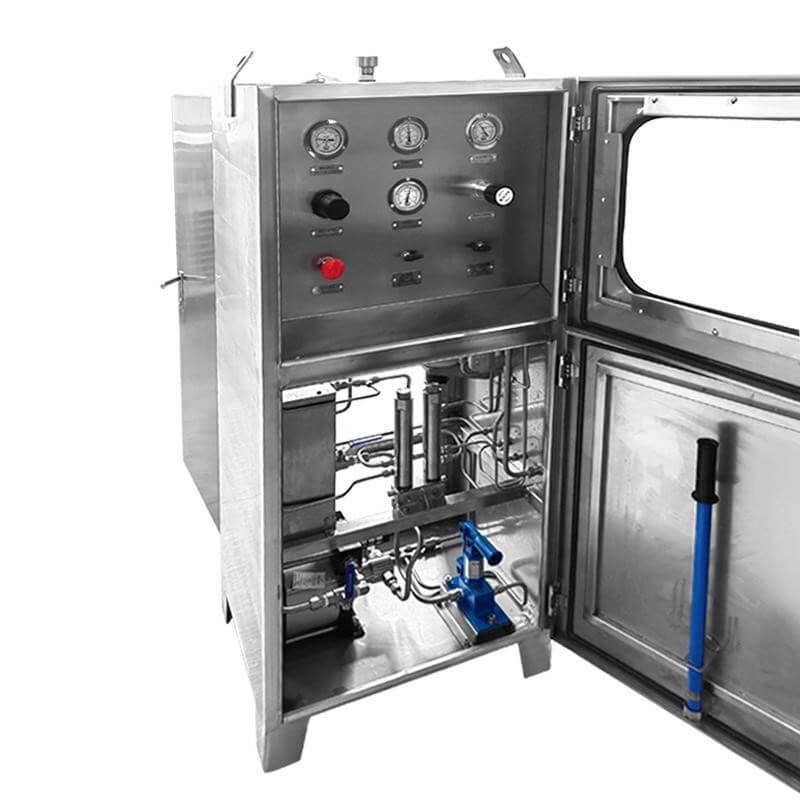
During surface well testing, the ESD system and SSV work together to provide a controlled response to abnormal operating conditions.
The pneumatic circuit detects or receives the shutdown signal, the hydraulic circuit releases the pressure holding the valve open, and the fail-closed SSV isolates the wellstream.
Understanding how these components interact is essential when configuring, testing, and operating a surface well testing package.
Reliable emergency shutdown protection depends not only on the equipment itself but also on proper commissioning, functional testing, and verification that every bypass has been returned to its normal operating condition.
-
2026 / 08 / 13
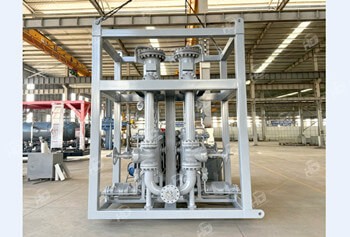 Dual Pot Sand Filter Designed and Manufactured for an Oman Oil & Gas Project
-
2026 / 08 / 07
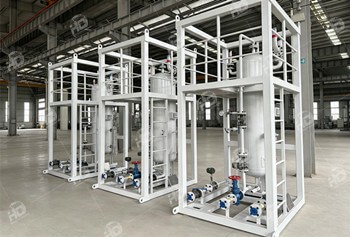 Three Vertical Three-Phase Separators Completed for Oil & Gas Project by HC Petroleum
-
2026 / 07 / 24
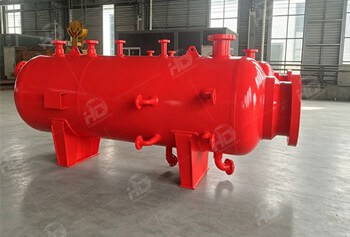 Two 1440 PSI Three-Phase Separators Completed for Nigeria Oil & Gas Project
- +86 158 6190 3617
