





During oil and gas well testing, a well test separator separates the incoming wellstream into gas, oil, and water. To maintain stable operation, the liquid level inside the vessel must be kept within an appropriate range.
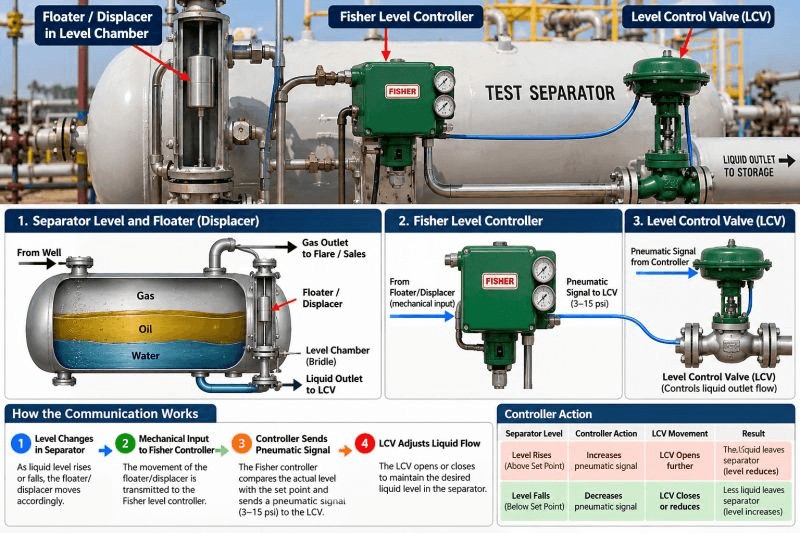
The level controller and level control valve are two key components of the liquid level control system. The controller monitors changes in liquid level and adjusts its output signal, while the control valve regulates the liquid discharge rate. Working together, they help maintain a stable liquid level inside the separator.
How Does a Level Controller Detect Liquid Level Changes?
Well test separators commonly use float-type or displacement-type level sensing mechanisms. As the liquid level inside the vessel changes, the sensing element responds through changes in buoyancy or mechanical displacement.
The level controller uses this information to determine the current liquid level and compares it with the setpoint. Based on the difference, it adjusts the output signal to regulate the liquid discharge.
For example, when the liquid level rises above the setpoint, the controller may signal the control valve to increase the discharge rate. When the level falls below the setpoint, it may reduce the discharge rate.
The actual control response depends on the selected control arrangement and instrument configuration.
How Does a Level Control Valve Regulate Liquid Discharge?
A level control valve (LCV) is typically installed on the liquid outlet line of a well test separator. Its main function is to regulate the amount of liquid leaving the vessel.
In a common control arrangement, when the liquid level rises, the controller adjusts its output to increase the valve opening, allowing more liquid to flow out. When the liquid level falls, the valve opening is reduced to decrease the discharge rate.
By adjusting the valve position, the system helps balance the liquid entering and leaving the separator, keeping the liquid level within the desired operating range.
The actual valve action depends on the controller settings, actuator type, and valve configuration. The installed system should always be checked against the equipment design and instrument settings.
How Do the Level Controller and Control Valve Work Together?
The level controller and control valve form a continuous feedback control loop rather than operating independently.
The basic process is:
Liquid level changes → Sensing element detects the change → Level controller adjusts its output → Control valve changes position → Liquid discharge rate changes → Liquid level moves back toward the setpoint.
This process continues during operation. When the incoming liquid flow changes, the control system responds to the resulting level variation by adjusting the discharge rate.
Proper level control helps reduce the risk of excessive liquid accumulation or an excessively low liquid level, both of which can affect separator operation and downstream measurement.
What Should Be Checked When Level Control Problems Occur?
If the liquid level continues to rise, falls continuously, or fluctuates frequently, the problem should not automatically be attributed to a faulty level controller or control valve.
For example, a continuously rising liquid level may be caused by an increase in inlet flow, a restricted liquid outlet, insufficient valve opening, or an abnormal pneumatic control signal.
If the liquid level continues to fall, possible causes include reduced inlet flow, excessive liquid discharge, or an abnormal control response.
If the controller is sending an adjustment signal but the valve does not respond as expected, further checks may be needed on the instrument air supply, actuator, positioner (if installed), and valve mechanism.
Troubleshooting should therefore consider several factors together, including the actual liquid level, inlet flow conditions, controller output, and valve response. Any inspection or maintenance involving pressurized equipment must be carried out by qualified personnel in accordance with site safety procedures.
In a well test separator, the level controller monitors liquid level changes and adjusts the control signal, while the level control valve regulates the liquid discharge rate in response. Together, they help maintain an appropriate liquid level for stable separation and reliable downstream measurement.
Understanding how this control loop works can help operators better understand separator operation and provide a useful starting point for troubleshooting liquid level control problems.
-
2026 / 08 / 13
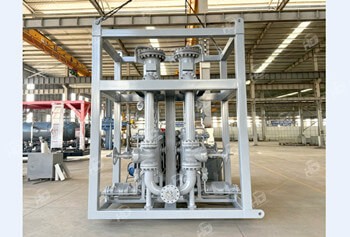 Dual Pot Sand Filter Designed and Manufactured for an Oman Oil & Gas Project
-
2026 / 08 / 07
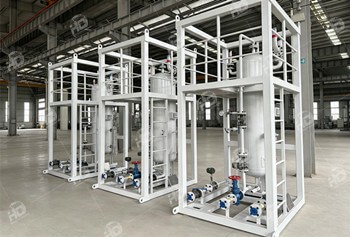 Three Vertical Three-Phase Separators Completed for Oil & Gas Project by HC Petroleum
-
2026 / 07 / 24
 Two 1440 PSI Three-Phase Separators Completed for Nigeria Oil & Gas Project
- +86 158 6190 3617
