





Over the past few days, several people have sent us messages asking the same question: what happens if the liquid in a three-phase separator is not drained in time?
This is actually one of the most common issues operators encounter in the field. From our experience in oil and gas projects, I can say this very clearly: the consequences can be more serious than many people think.
At first glance, it may seem like a small issue. The liquid level inside the separator is just a little higher than normal. But in reality, it can gradually affect the stability of the entire process system.
The first impact is usually on separation efficiency.
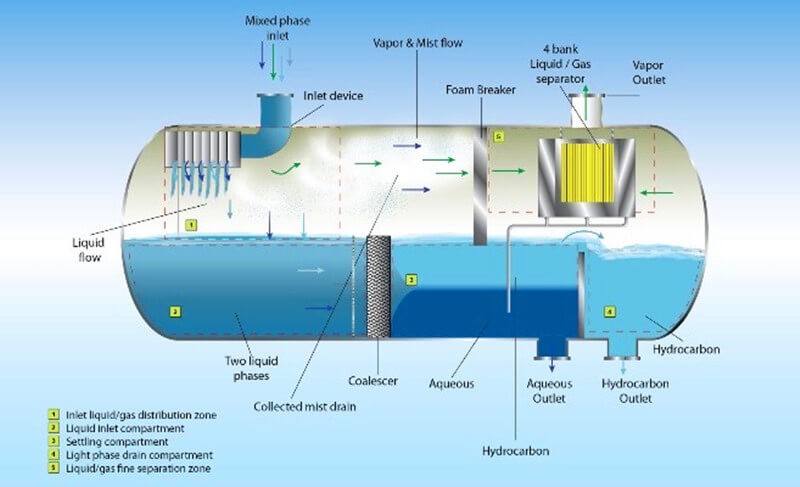
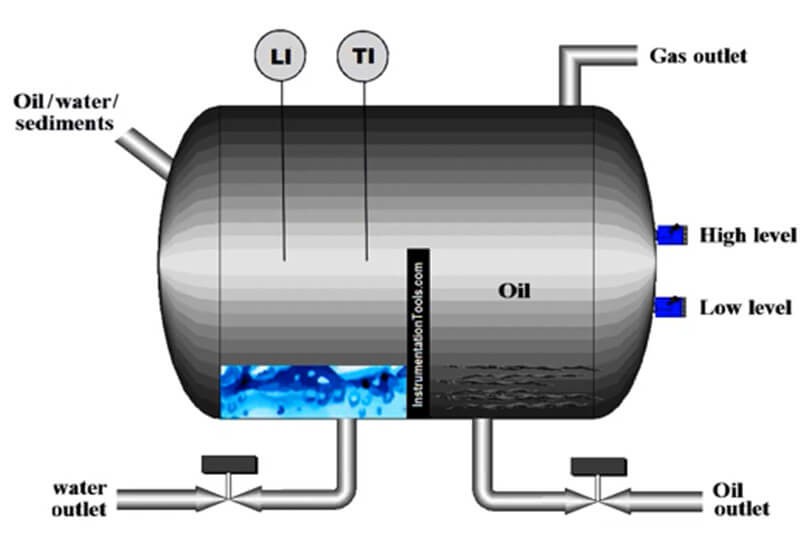
A three-phase separator mainly relies on gravity settling and density differences to separate gas, oil and water. When the liquid level inside the vessel is within the normal operating range, the three phases can form a relatively stable structure. Gas stays in the upper section, oil forms the middle layer, and water settles at the bottom.
However, when liquid is not drained in time, the overall liquid level inside the separator begins to rise. As the level increases, the available gas space inside the vessel becomes smaller.
When this happens, the gas residence time inside the separator becomes shorter. Liquid droplets that should normally settle inside the vessel may instead be carried out together with the gas stream. In other words, liquid carryover in the gas outlet starts to increase and the separation efficiency decreases.
In natural gas processing systems, this often means that downstream equipment has to handle additional liquid load.
Another common problem caused by high liquid level is liquid entering the gas outlet pipeline.
When the liquid level approaches the gas outlet area, the internal flow conditions inside the separator can become unstable. Some liquid may be picked up by the gas flow and carried into the outlet line.
If this situation continues for some time, several problems may appear in the system. Liquid may start to accumulate in the gas pipelines. In some cases liquid may enter compressors. Downstream equipment such as heaters or filtration systems may also begin to operate less smoothly.
In gas gathering and processing facilities, liquid entering a compressor is considered a particularly serious risk. Even a small amount of liquid can potentially cause equipment damage or force an unexpected shutdown.
Another issue that is often overlooked in the field is the stability of the oil and water interface inside the separator.
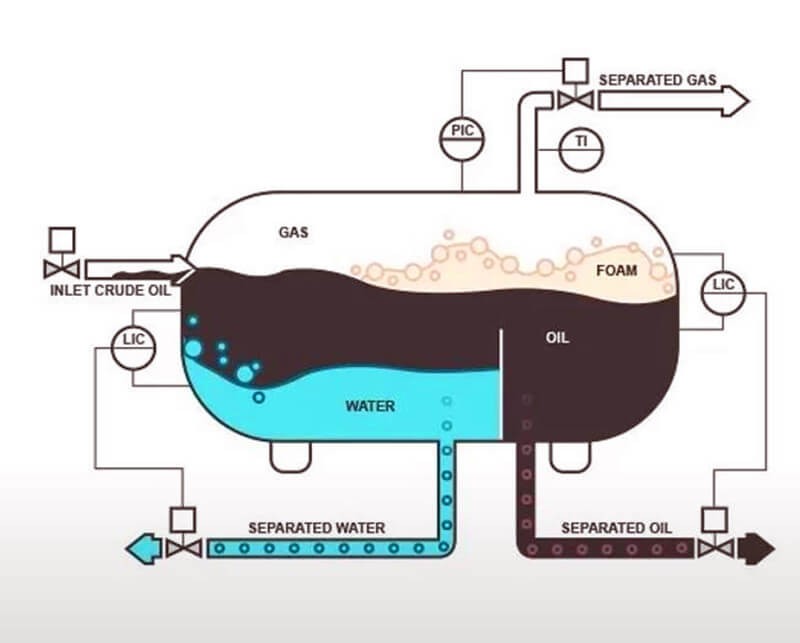
Under normal operating conditions, a three-phase separator maintains a stable layered structure. Gas stays at the top, oil remains in the middle section, and water settles at the bottom. The stability of this structure is an important part of maintaining good separation performance.
But when liquid continues to accumulate inside the vessel and the overall level keeps rising, the internal balance starts to change. The oil layer may become thinner while the water layer moves upward. At the same time, the internal flow pattern can become less stable.
After some time, oil and water may start to mix.
When this happens, two common problems usually appear. The first is that the water content in crude oil increases, which can affect the quality of the exported oil. The second is that the oil content in produced water increases, which creates more load for downstream water treatment systems.
Many field operators notice that once the liquid level in the separator becomes difficult to control, downstream processing equipment also begins to experience problems. In many cases the root cause is simply poor liquid level control inside the separator.
There is also another effect that is not always obvious at first. As the liquid inside the separator increases, the gas space becomes smaller and the internal flow conditions change. Operators sometimes feel that the separator or even the entire processing system is not running as smoothly as before.
In more severe cases, if liquid enters the gas pipeline and forms liquid pockets, it may create pipeline shocks or liquid slugging. This introduces additional operational risks for the whole system.
From field operation experience, liquid level control is one of the most important aspects of running a three-phase separator.
Many issues that initially look like equipment problems or pipeline problems eventually turn out to be related to liquid level management. For this reason operators usually pay close attention to whether the level instruments are working properly, whether the drain valves and discharge pipelines remain clear, and how the liquid level responds when operating conditions change.
In simple terms, when a three-phase separator is not drained in time, it may look like a small issue at first. But over time it can affect separation efficiency, downstream equipment performance, product quality and even the stability of the entire process system.
That is why proper liquid level monitoring and timely drainage are always essential for stable operation in oil and gas processing facilities.
-
2026 / 08 / 13
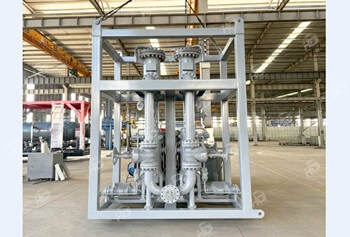 Dual Pot Sand Filter Designed and Manufactured for an Oman Oil & Gas Project
 -
2026 / 08 / 07
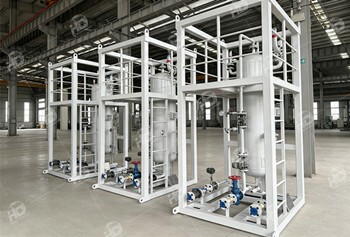 Three Vertical Three-Phase Separators Completed for Oil & Gas Project by HC Petroleum
 -
2026 / 07 / 24
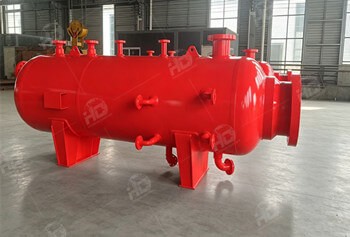 Two 1440 PSI Three-Phase Separators Completed for Nigeria Oil & Gas Project
- +86 158 6190 3617
