





In well testing operations, separator sizing is often misunderstood as a simple matter of making the vessel “large enough.” In reality, separator volume selection is a process engineering issue closely related to fluid residence time, flow stability, separation efficiency, and operational control.
From a process perspective, separator volume is not merely a measure of how much fluid the vessel can contain. More importantly, it determines whether the wellstream has sufficient time and effective internal space to complete the separation process under actual operating conditions.
After entering the separator, the wellstream typically undergoes several stages:
Flow velocity reduction
Initial gas-liquid disengagement
Liquid droplet settling
Gas mist removal
Oil-water interface stabilization
Liquid level control and liquid discharge
All of these processes require adequate residence time and effective separation space inside the vessel.
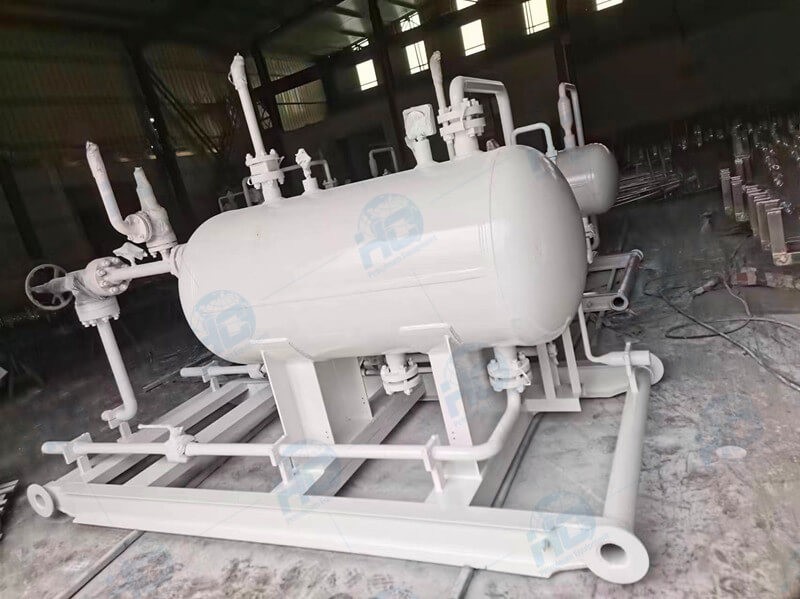
If the separator volume is too small, the fluid residence time becomes insufficient. Gas may not fully disengage from the liquid phase before entering downstream equipment, resulting in gas-liquid carryover, unstable liquid levels, and increased metering inaccuracies.
However, increasing vessel size is not always the correct solution.
In many projects, separators are intentionally oversized as a safety margin, based on the assumption that “larger volume means better separation.” In actual field applications, oversized separators often introduce another set of operational challenges.
The first issue is slow liquid level response.
As vessel volume increases, liquid level response becomes less sensitive, particularly during low-rate well testing operations. Small flow variations may not produce noticeable level changes for extended periods, while sudden fluctuations can become more difficult to control. In unstable well conditions, operators frequently encounter situations where the liquid level appears stable for a long time and then changes abruptly.
Another common issue is flow short-circuiting.
If the separator diameter-to-length ratio is not properly designed, the incoming fluid may bypass the effective separation zone and flow directly toward the outlet. In such cases, large portions of the vessel become hydraulically ineffective. Although the separator appears physically large, the actual effective separation volume may remain limited.
In addition, larger vessel volume generally results in:
Increased equipment weight
More difficult skid transportation and field installation
Longer startup and preheating time
Increased draining and purging time
Higher overseas transportation cost
These factors become especially important in mobile well testing and temporary production operations.
In practice, separator sizing should never begin with vessel dimensions alone. The first step is always understanding the actual operating conditions and process requirements.
Process engineers typically evaluate several key parameters during separator sizing and selection.
1. Design Throughput
This includes:
Gas production rate
Liquid production rate
Instantaneous peak flow rate
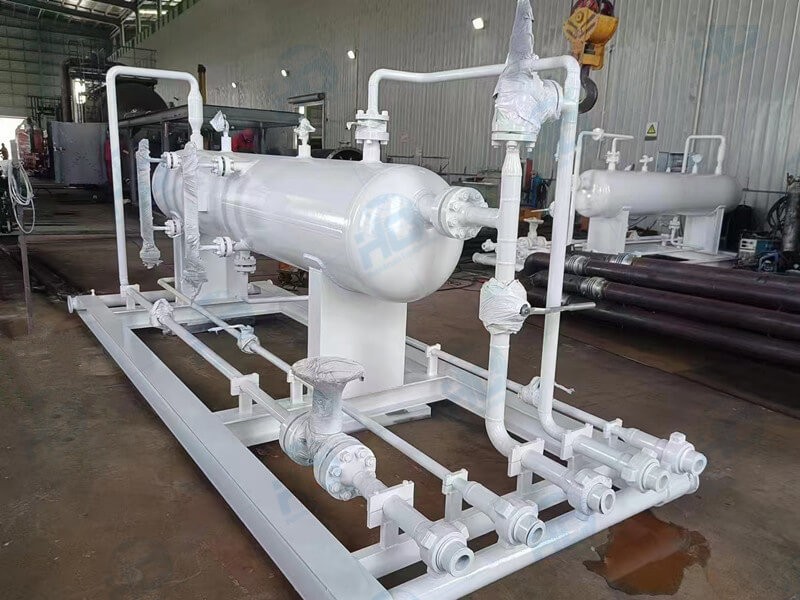
Well testing conditions are rarely stable. Instantaneous flow rates may significantly exceed average production rates during flowback or unstable production periods. If separator sizing is based only on average flow conditions, excessive gas velocity or liquid carryover may occur during operation.
2. Operating Pressure
Higher operating pressure increases gas density, which generally improves gas-liquid separation conditions. However, high-pressure operation also increases internal turbulence and flow instability, making internal vessel configuration equally important.
This is one of the main reasons why two separators with the same 1440 psi pressure rating may demonstrate very different field performance depending on internal design quality.
3. Fluid Characteristics
In many field applications, fluid properties create greater separation challenges than flow rate itself.
Typical challenging conditions include:
High sand production
High water cut
High gas-oil ratio (GOR)
Foaming crude oil
Condensate-rich natural gas
Sour service containing H₂S
These conditions directly affect residence time requirements and separator performance.
For example, in foaming well conditions, foam accumulation may significantly reduce the effective vapor-liquid separation space even when total vessel volume appears sufficient.
4. Testing Objectives
Separator sizing philosophy also depends heavily on the purpose of the well test.
For short-term flowback testing, the priority may be rapid fluid handling capability and operational flexibility.
For detailed production testing and reservoir evaluation, greater emphasis is typically placed on separation stability, measurement accuracy, and process controllability.
In many cases, the objective is not simply to use a larger separator, but to achieve a stable and well-balanced separation system.
Ultimately, well testing separator sizing is not a matter of making the vessel larger or smaller. It is a process matching issue involving operating conditions, fluid behavior, and separation requirements.
A properly designed well testing separator should comprehensively consider:
Production throughput
Operating pressure
Fluid properties
Testing objectives
Transportation limitations
Process stability and controllability
In actual field operation, separator performance is often determined not by the physical size of the vessel, but by whether the process design and effective separation volume truly match the well conditions.
-
2026 / 08 / 13
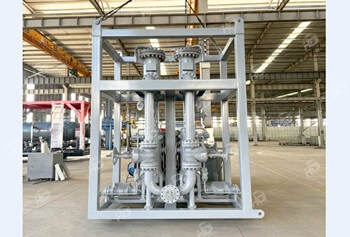 Dual Pot Sand Filter Designed and Manufactured for an Oman Oil & Gas Project
 -
2026 / 08 / 07
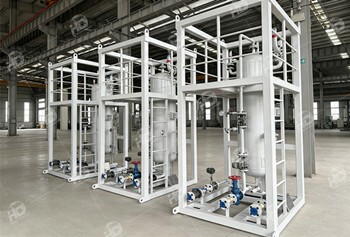 Three Vertical Three-Phase Separators Completed for Oil & Gas Project by HC Petroleum
 -
2026 / 07 / 24
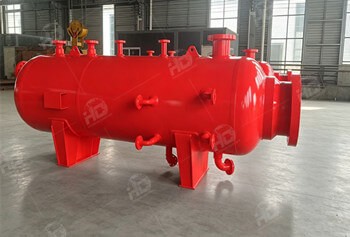 Two 1440 PSI Three-Phase Separators Completed for Nigeria Oil & Gas Project
- +86 158 6190 3617
